

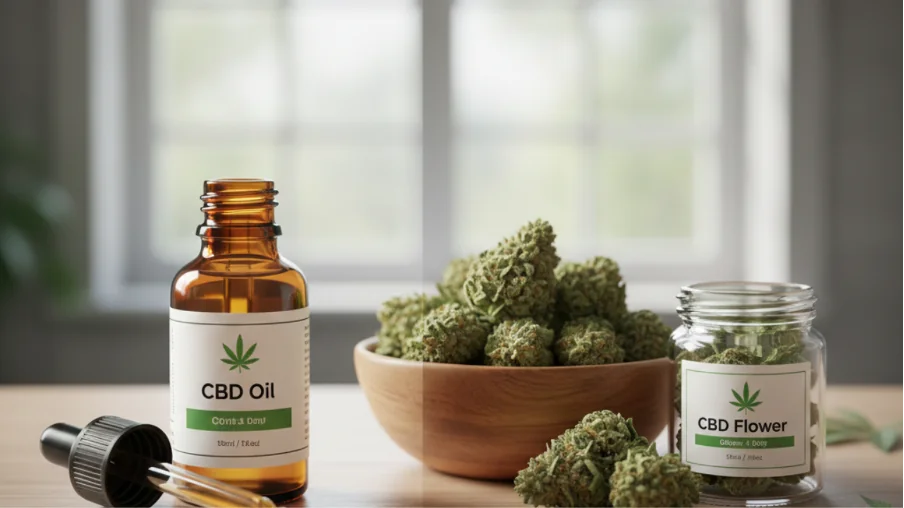
The main difference between CBD oil vs CBD flower is the form in which cannabidiol is presented. CBD oil is typically a formulated product containing CBD extract and a carrier oil, while CBD flower is the harvested flower of Cannabis sativa selected for its cannabinoid profile.
Although both may contain cannabidiol, they can differ considerably in concentration, ingredients, aroma, labelling, storage, and intended use. For consumers trying to choose between them, comparing the product format alone is not enough. Cannabinoid content, THC information, laboratory documentation, and local requirements all matter.
This guide explains those differences without treating either option as universally better.
CBD Oil vs CBD Flower: Quick Comparison
| Factor | CBD Oil | CBD Flower |
|---|---|---|
| Product format | Liquid formulation | Dried cannabis/hemp flower |
| How is it produced | CBD is extracted and usually combined with a carrier oil | Flowers are harvested, dried, and prepared for sale |
| Cannabinoid profile | Depends on the extract and formulation | Naturally varies between plants and batches |
| Typical method of use | Depends on the specific product and label instructions | Depends on product classification and permitted use |
| Onset considerations | Varies according to formulation and method of use | Varies according to method of use and individual factors |
| Duration considerations | Cannot be predicted from format alone | Cannot be predicted from format alone |
| Aroma | Usually mild, depending on formulation | Typically more noticeable due to natural aromatic compounds |
| Ease of measuring amount | Often easier because CBD content is stated on the label | Requires attention to cannabinoid percentages and product weight |
| Discretion | Compact and generally less aromatic | More distinctive appearance and aroma |
| Storage | Usually kept sealed away from heat and direct light | Requires protection from excess heat, light, and moisture |
| Beginner considerations | Labels may make concentration easier to compare | Requires more attention to cannabinoid and laboratory information |
The biggest practical distinction is consistency of format. CBD oil is a formulated product, so its label can state a specific concentration or quantity of CBD. CBD flower retains more characteristics of the original plant material and can naturally vary in cannabinoid and terpene composition.
That does not automatically make oil more effective or flower more natural in a way that determines quality. Quality depends on the individual product.
What Is CBD Oil?
CBD oil is generally made by combining a cannabidiol-containing extract with a carrier oil. Common carrier oils can include medium-chain triglyceride oils and other food-grade oils, although formulations vary between manufacturers.
CBD, or cannabidiol, is one of the cannabinoids found in the cannabis plant. Unlike delta-9-tetrahydrocannabinol, better known as THC, CBD is not considered intoxicating in the same way. The World Health Organization’s information on cannabidiol provides further background on cannabidiol, including its relationship to cannabis and the available evidence surrounding the compound.
A CBD oil label may state the amount of CBD in several ways. Depending on the manufacturer, this can include:
- Total milligrams of CBD in the container
- CBD concentration as a percentage
- container volume
- cannabinoid composition
- batch information
Understanding these figures is more useful than judging a product by terms such as “premium” or “extra strong.”
CBD oils also differ according to the type of extract used. Some formulations contain primarily isolated cannabidiol, while others may contain additional naturally occurring cannabis compounds. The exact composition should be determined from the product specification rather than assumed from marketing terminology.
For consumers, documentation matters. Two bottles that both carry the words “CBD oil” can contain very different concentrations, ingredients, and cannabinoid profiles.
A clear label and reliable laboratory information therefore provide more meaningful comparison points than packaging or product claims.
What Is CBD Flower?
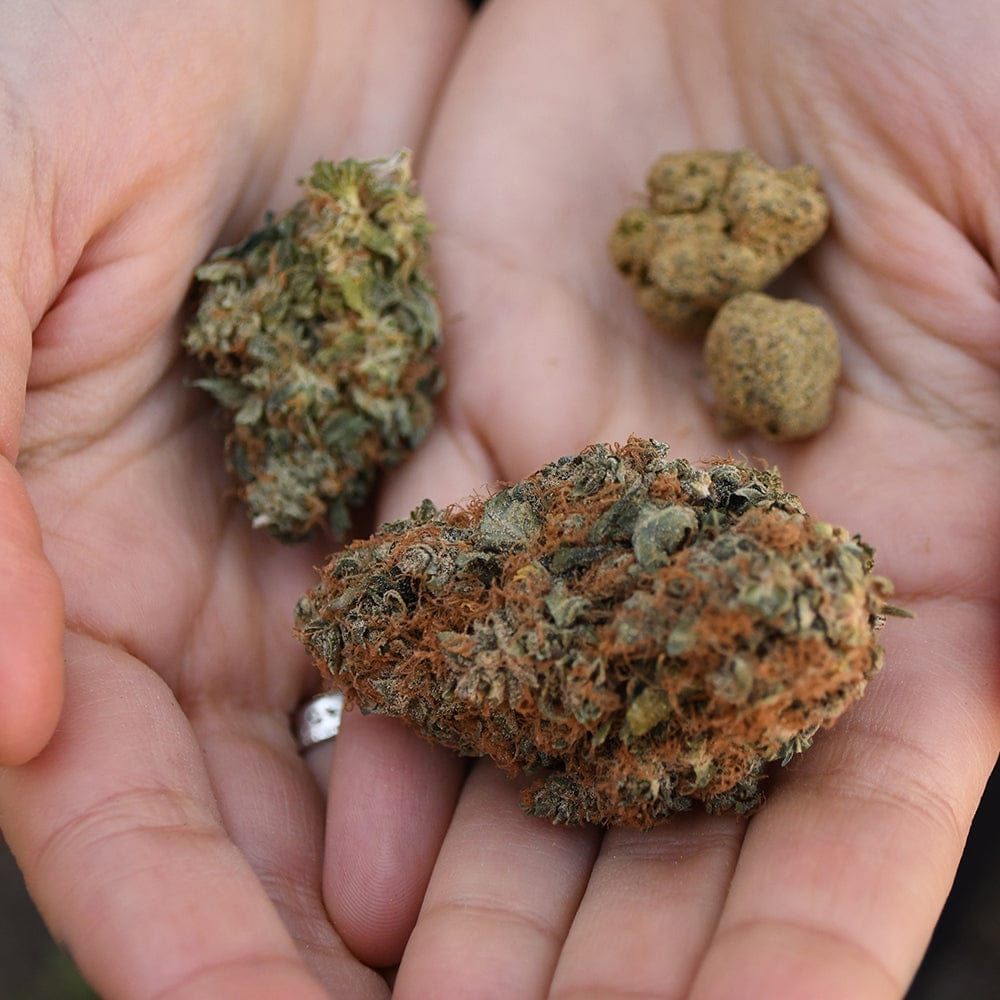
CBD flower generally refers to the harvested flower of Cannabis sativa selected or cultivated for a cannabinoid profile containing cannabidiol.
Unlike CBD oil, the flower remains recognisable as plant material. After harvesting, it is normally dried and prepared for its intended market or permitted use.
The cannabis plant produces numerous compounds, including cannabinoids and terpenes. CBD and THC are two of the best-known cannabinoids, but their concentrations can vary significantly depending on genetics, cultivation conditions, processing, and individual batches.
CBD flower should not automatically be treated as equivalent to high-THC cannabis. Products may have substantially different cannabinoid profiles. However, the words “CBD flower” also do not guarantee that a particular product meets the requirements of every European country.
This distinction matters because rules covering cannabis-derived products vary between jurisdictions and can depend on THC concentration, product classification, intended use, and national legislation.
The European Union Drugs Agency’s information on CBD explains the European Court of Justice’s position that cannabidiol itself should not be considered a narcotic drug under the relevant international convention. That principle should not be interpreted as making every CBD-containing product automatically lawful throughout Europe. Individual countries can maintain their own product rules and controls.
Another characteristic of a flower is its terpene profile. Terpenes are aromatic plant compounds that contribute to differences in smell and flavour. Their presence should not be treated as evidence that a flower will produce specific medical or therapeutic outcomes.
When comparing CBD flowers, useful information includes CBD content, THC content, batch identification, and available laboratory documentation.
What Is the Difference Between CBD Oil and CBD Flower?
The difference between CBD oil and CBD flower extends beyond one being a liquid and the other being plant material. Production, composition, aroma, measurement, and day-to-day handling can all differ.
Product Form
CBD oil is a prepared liquid formulation. CBD flower remains much closer to the physical form in which the flower was harvested from the plant.
That difference affects packaging, labelling, storage, and the information consumers need to understand before choosing a product.
An oil bottle might specify the total CBD in milligrams and the volume of liquid. A flower product is more likely to state its weight together with cannabinoid percentages.
Production
CBD oil requires additional processing after cannabis or hemp material has been harvested.
Cannabinoids are extracted from plant material, after which the extract can be refined and formulated with a carrier oil. The final composition depends on the extraction and manufacturing process.
CBD flower undergoes a different process. The flower is grown, harvested, dried, and prepared while maintaining the plant material itself.
Neither approach automatically indicates higher quality. Manufacturing controls, cultivation standards, contamination testing, storage, and transparent product information are more meaningful indicators.
Cannabinoid Composition
Cannabinoid composition varies considerably between CBD products.
A formulated oil can be produced to contain a defined concentration of CBD. Depending on the formulation, additional cannabinoids may also be present.
The flower contains cannabinoids as part of the plant material itself. Its percentages can vary from strain to strain and potentially from one batch to another.
For that reason, consumers should not assume all CBD oils contain the same cannabinoid profile or that every CBD flower has a comparable CBD-to-THC ratio.
The product’s own documentation should be the reference point.
Terpenes and Aroma
One of the most obvious practical differences between CBD flower and CBD oil is aroma.
Cannabis flower naturally contains aromatic compounds, including terpenes, so its scent may be noticeable even while stored.
CBD oil is usually considerably more discreet in this respect, although its smell and flavour can vary depending on the extract, carrier oil, and additional ingredients.
Terpenes are useful for describing a plant’s aromatic profile, but consumers should be cautious about claims assigning guaranteed health effects to individual terpenes.
Method of Use
How a CBD product is intended to be used depends on its formulation, product classification, and manufacturer instructions.
A CBD oil intended for a particular use should be used according to the directions provided for that specific product.
The same principle applies to flowers. Permitted uses and product classifications can vary between European markets, so consumers should not assume that a method permitted in one country is automatically permitted in another.
Consumers unfamiliar with the various formats can read this guide on how to use CBD to understand some of the basic considerations before comparing individual products.
Measuring CBD
Measurement is one area where CBD oil can be easier to interpret.
A properly labelled bottle can state both the total CBD content and its concentration, giving the consumer a defined figure to work with.
For example, the percentage printed on two different oils may not tell the whole story if the bottles contain different volumes. Total CBD content, concentration, and serving information need to be read together.
Flower requires a different calculation because cannabinoid content is commonly represented as a percentage of the plant material.
Laboratory analysis therefore becomes particularly important when comparing flower products.
Neither product should be judged by packaging terms such as “strong,” “premium,” or “high potency” without checking the actual cannabinoid information.
Convenience and Discretion
CBD oil is usually compact, easy to store, and has relatively little noticeable aroma. The bottle format can also make it convenient to transport where doing so is permitted.
CBD flower has a distinctive appearance and generally a stronger plant aroma. It may consequently require more consideration regarding storage and transport.
Legal requirements should always be checked before carrying cannabis-derived products across national borders. A product being permitted for sale in one jurisdiction does not automatically mean it can be transported into another.
Storage
Both CBD oil and CBD flower can deteriorate when stored poorly.
CBD oil should generally remain properly sealed and protected from excessive heat, light, and other conditions that could affect its quality. Consumers should follow any storage instructions printed on the product.
Flower likewise benefits from appropriate storage that helps protect it from excessive moisture, heat, light, and contamination.
Storage is not simply about preserving aroma. It is part of maintaining the condition and integrity of the product.
CBD Oil vs CBD Flower for Beginners
When comparing CBD oil vs CBD flower for beginners, the best starting point is not deciding which product is more powerful. It is deciding which one provides the information and format that best match the consumer’s needs.
A beginner should consider several factors:
- Product format: Would a formulated liquid or a dried plant product be easier to understand and manage?
- CBD concentration: Is the cannabinoid content clearly stated?
- THC information: Does the label or documentation provide clear THC data?
- Ingredients: For oils, are the extract, carrier oil, and other ingredients identified?
- Laboratory documentation: Is credible product testing available?
- Intended use: What does the manufacturer say the product is designed for?
- Local rules: Is the specific product category permitted in the consumer’s jurisdiction?
- Personal preference: Does the consumer prefer a compact, relatively discreet product or plant material with its natural aromatic characteristics?
For many beginners, the structured concentration information on CBD oil labels may make different products simpler to compare.
Others may prefer CBD flower because they want a product closer to the original plant material and are interested in comparing cannabinoid and terpene profiles.
Neither preference makes one format universally better.
Is CBD Oil Stronger Than CBD Flower?
Not necessarily.
Asking whether CBD oil is stronger than CBD flower assumes that product format determines potency, but it does not.
“Strength” can refer to several different things, including:
- CBD concentration
- total amount of CBD
- amount of product used
- cannabinoid profile
- formulation
- individual response
An oil with one concentration cannot be meaningfully compared with a flower containing a particular percentage of CBD without also considering quantity and composition.
Likewise, a larger percentage printed on a label does not guarantee a stronger subjective effect.
Consumers should compare measurable cannabinoid information rather than relying on descriptions such as strong or mild.
Does CBD Oil Work Differently From CBD Flower?
CBD oil and CBD flower can differ in how they are formulated and used, but predicting exactly how someone will respond is more complicated.
Several variables can affect the experience.
Product composition matters because two CBD products can contain different amounts and combinations of cannabinoids.
Method of exposure matters because different products may be intended for different forms of use.
Formulation matters because carrier ingredients, cannabinoid concentration, and other components can vary.
Individual variability also matters. People do not necessarily respond identically to the same product.
This is an area where careful wording is important. Consumer anecdotes about CBD should not be treated as evidence that a particular product will provide the same result for everyone.
European food-safety assessments also demonstrate why CBD claims require caution. In February 2026, EFSA established a provisional safe intake level for certain highly purified CBD food-supplement formulations while emphasising important limitations. The assessment does not apply universally to every CBD oil or cannabis-derived product, and EFSA said safety could not be established for certain groups, including people taking medication.
Consumers interested in the scientific context can review the European Food Safety Authority guidance on cannabidiol.
The key point is that product format alone cannot reliably predict effects or safety.
CBD Oil vs CBD Flower — Which Is Better?
There is no universal winner.
The better choice depends on what the consumer values and whether the specific product meets appropriate quality and regulatory requirements.
CBD oil may appeal more to someone who prioritises:
- clearly stated concentrations
- compact packaging
- relatively discreet storage
- ingredient information
- Easier comparison of labelled CBD quantities
- a standardised product format
CBD flower may appeal more to someone interested in:
- cannabis in a less-processed physical form
- naturally occurring aromatic characteristics
- Comparing different flower profiles
- cannabinoid percentages
- terpene information
The most important comparison is therefore not simply CBD oil or CBD flower.
It is one clearly documented product versus another clearly documented product.
A transparent CBD oil with detailed cannabinoid information is more useful to evaluate than an oil making vague potency claims. The same applies to CBD flower.
What Should You Check Before Choosing a CBD Product?
Whatever format you choose, several details deserve attention before making a decision.
Cannabinoid Content
Look for clear CBD and THC information rather than relying solely on a product name.
CBD Concentration
For oils, check both the stated concentration and the total quantity of CBD. For the flower, examine the cannabinoid percentages provided for the batch.
THC Information
Do not assume a product contains no THC simply because CBD appears prominently on the label.
THC levels are also relevant to regulatory status, and applicable requirements may differ between countries and product classifications.
Ingredients
CBD oil should clearly identify its ingredients, including the carrier oil and other added components.
Flower products have a simpler physical composition, but cultivation, processing, and contamination controls still matter.
Batch Information
Batch identification improves traceability and helps connect a product with relevant laboratory documentation.
Laboratory Documentation
Where test results are supplied, confirm that they correspond to the relevant product or batch and examine what was actually tested.
A laboratory report is more useful when it clearly identifies cannabinoid concentrations and the sample being analysed.
Supplier Transparency
Reliable product information should explain what the product contains without depending on exaggerated claims.
Descriptions such as “strongest,” “best,” and “premium” are marketing language unless supported by measurable specifications.
Intended Use
Read the manufacturer’s instructions and product classification.
Products containing CBD can fall into different regulatory categories depending on the country, composition, and intended use.
Local Requirements
Europe is not a single CBD regulatory market.
Rules can vary by country and may depend on the source of the CBD, THC concentration, final product type, intended use, and other requirements.
Consumers should therefore verify the rules applying to the specific product in the country where it is purchased, possessed, or used.
Frequently Asked Questions
Is CBD flower the same as CBD oil?
No. CBD flower is plant material harvested from Cannabis sativa, while CBD oil is a formulated product generally made using a CBD-containing extract and carrier oil. They can also differ in concentration, ingredients, aroma, and labelling.
Is CBD oil stronger than CBD flower?
Not automatically. Strength depends on CBD concentration, total quantity, cannabinoid composition, and the specific product. Product format alone does not determine potency.
Does CBD flower contain THC?
CBD flower may contain THC in varying concentrations depending on the plant and product. Consumers should check reliable cannabinoid information rather than assuming that CBD flower is automatically THC-free.
What’s the main difference between CBD oil and CBD flower?
The main difference is format. CBD oil is a processed liquid formulation containing CBD, while CBD flower is dried cannabis/hemp flower. That difference also affects concentration labelling, aroma, ingredients, storage, and product comparison.
Is CBD oil or CBD flower better for beginners?
Neither is inherently better. CBD oil may be easier for some beginners to compare because concentrations are often clearly labelled. CBD flower requires close attention to cannabinoid percentages and product documentation. The right choice depends on the individual product, intended use, and applicable local requirements.
How do I compare CBD products?
Start with measurable information: CBD concentration, THC content, ingredients, batch details, laboratory documentation, and intended use. Then consider practical factors such as product format, storage, and local rules. Avoid choosing solely on marketing terms such as “strong” or “premium.”
CBD Oil vs CBD Flower: The Bottom Line
The comparison between CBD oil vs CBD flower comes down primarily to format, composition, and practical preferences.
CBD oil is a formulated liquid that can provide clearly labelled CBD concentrations and compact storage. CBD flower retains the physical characteristics of the cannabis plant, including its naturally occurring cannabinoids, terpenes, and distinctive aroma.
Neither category is automatically stronger, safer, higher quality, or better for every consumer.
Instead, compare the specific product’s cannabinoid profile, CBD concentration, THC information, ingredients where applicable, laboratory documentation, intended use, and storage requirements.
For European consumers, local product rules also matter. The regulatory treatment of CBD products can vary according to jurisdiction, THC content, classification, and intended use.
A well-informed choice should therefore rely on transparent product information rather than assumptions about whether oil or flower is inherently superior.